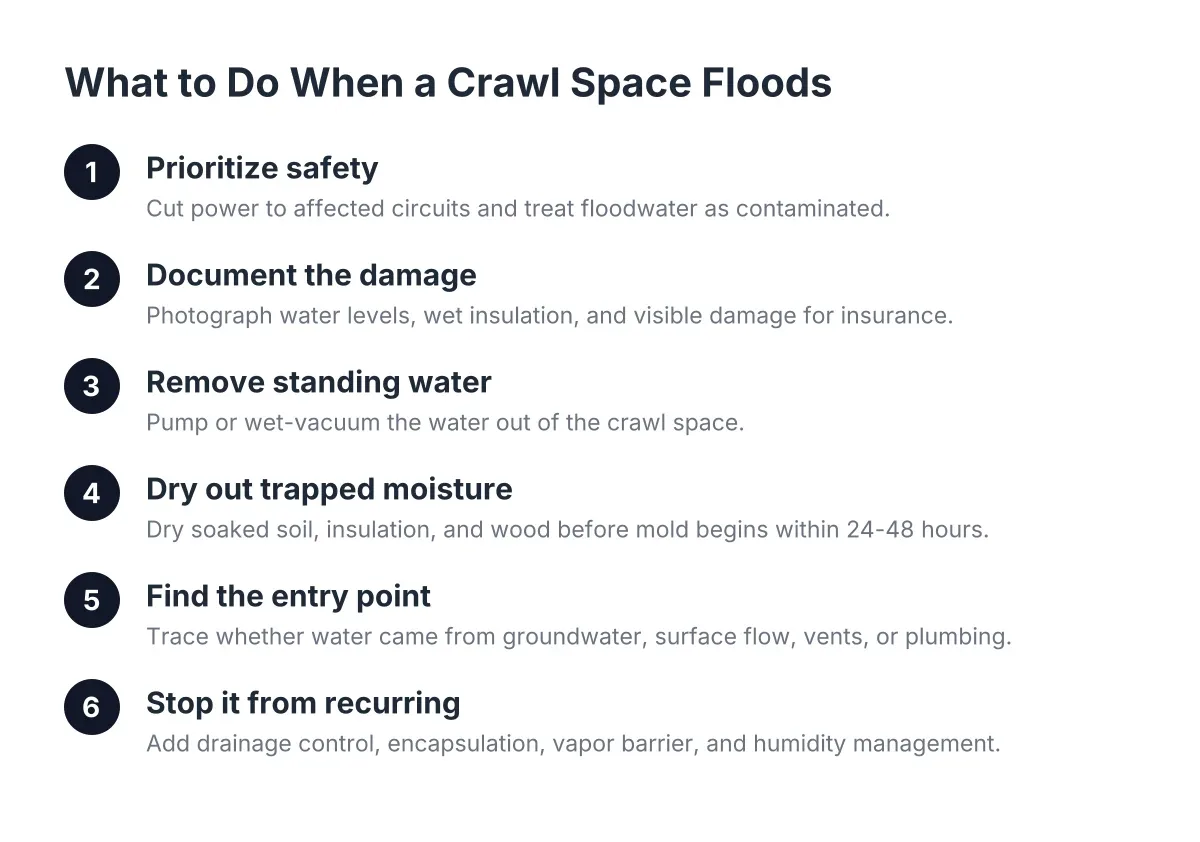
Crawl Space Flooding — Complete Guide
Crawl space flooding is one of the most stressful problems a Charleston homeowner can face, especially after a heavy rain or tropical storm. This guide covers why water ends up under Lowcountry houses, what to do the moment you find it, and how to stop it from coming back. You'll learn the root causes tied to our coastal climate, the warning signs of water damage, and the fixes that actually hold up here. If you just discovered standing water under your house, start reading now, because the clock matters more than most people realize when crawl space flooding is involved.
What You'll Find in This Guide
- How Much Does Crawl Space Flooding Cost?
- Crawl Space Insulation in Charleston, SC
- Crawl Space Dehumidifier Installation in Charleston, SC
- Crawl Space Moisture Control in Charleston, SC
Why Crawl Space Flooding Happens Under Charleston Homes
Charleston homes flood underneath for reasons that have nothing to do with bad luck. Our region sits on a high water table, and much of the metro area lies in or near flood zones. When heavy rain falls, the ground saturates fast because the water has nowhere to drain. As a result, water pushes up from below and in from the sides of your crawl space at the same time, and that combination is what makes crawl space flooding so hard to fully prevent here.
Tidal flooding makes this worse. According to NOAA Tides and Currents, Charleston set a record of 17 high-tide flood days during the 2023–24 meteorological year. On those days, the water table rises even without rain. If a storm and a high tide arrive together, the ground under your house can stay soaked for days.
The construction style of older Charleston homes plays a role too. Many were built as raised pier-and-beam structures with vented crawl spaces. Those vents were meant to let the space breathe. In practice, they let in humid coastal air, wind-driven rain, and storm surge splash. Beyond that, decades of settling often leave the crawl space floor lower than the surrounding yard. Water follows gravity, so it pools in the lowest spot available, which is under your house.
The Most Common Entry Points
Water usually gets in through a few predictable routes. Surface runoff flows toward the foundation when gutters overflow or downspouts dump water at the base of the house. Grading that slopes toward the home instead of away from it sends every rainstorm straight to your foundation vents. Groundwater seeps up through the soil when the water table rises. Additionally, plumbing leaks and failed drain lines can flood a crawl space without a drop of rain falling.
None of this is rare. More than 60% of homes in the U.S. have had water or moisture problems in their basement or crawl space, according to the American Society of Home Inspectors. In the Lowcountry, the odds run even higher because of our climate and geography. The good news is that every one of these causes has a proven fix, which is exactly what a proper crawl space moisture control plan addresses.
Crawl Space Flooded? What to Do in the First 48 Hours
Finding water under your house triggers a specific kind of panic. You lift the access door, shine a light in, and see a reflection where dirt should be. Take a breath. Then act, because the first 48 hours determine how much damage that water does.
First, figure out whether water is still coming in. If a storm just passed, the flow may have stopped on its own. However, if water keeps rising, check for a burst pipe or a failed water heater line and shut off the supply if needed. Active plumbing leaks cause a surprising share of crawl space floods, and they won't stop until you stop them.
Second, do not wade in blind. Standing water in a crawl space can hide electrical hazards, displaced debris, and unstable ground. If the water is more than a few inches deep, or if you see it touching wiring or ductwork, call a professional before anyone goes under the house.
Third, document everything. Take photos and video of the water level, any visible damage, and the likely entry point. This helps with insurance claims and gives an inspector a clear picture of what happened. For guidance on flood insurance and what it covers, FEMA's National Flood Insurance Program is the authoritative source.
Why Waiting Makes It Worse
Water under a house does damage on a schedule. Within days, moisture soaks into floor joists, subflooring, and insulation. Within a week or two, mold can begin growing on wood and fiberglass. Meanwhile, humidity from the standing water rises into your living space through the floor. That's why your house smells musty after a flood even if the water never touched your floors.
Structural damage follows moisture damage. Wet wood softens, fasteners corrode, and support piers can shift in saturated soil. As a result, a flood you ignore in June can become a sagging floor by fall. The repair bill scales with the delay, which is why our crawl space flooding cost guide breaks pricing down by how far the damage has spread. Pumping out water early is cheap. Replacing rotted beams is not, and that gap in cost is the single biggest reason to act fast.
How to Prevent Crawl Space Flooding Before the Next Storm
Drying out a flooded crawl space solves today's problem. Preventing the next flood solves the real one. Because Charleston gets hit with heavy rain and tropical systems every year, prevention is not optional here. It's the difference between a dry crawl space and an annual emergency, and it's also the difference between a minor expense and a major one.
Start with the water outside. Extend downspouts away from the foundation, clear your gutters before hurricane season, and correct grading that slopes toward the house. These fixes are simple, but they cut off the largest volume of water before it ever reaches your crawl space. That said, exterior fixes alone rarely solve the problem on a high-water-table lot.
Drainage, Sump Pumps, and Vapor Barriers
For water that still gets in, you need a way to collect it and move it out. A French drain system inside the crawl space channels water to a low point. A sump pump then pushes it out and away from the foundation automatically. Together, they handle the groundwater intrusion that Lowcountry soil delivers every time the water table rises. For homes in flood-prone areas, this combination is the backbone of any serious defense against crawl space flooding.
A vapor barrier addresses what drainage can't. Even after standing water leaves, moisture evaporates off the exposed soil constantly. A sealed vapor barrier blocks that evaporation and keeps ground moisture out of your air. In many cases, full encapsulation with a crawl space dehumidifier is the final step, because Charleston's humidity will find its way into any vented space no matter how dry the ground stays.
Hurricane Season Prep for Your Crawl Space
Before each storm season, walk your property and check the basics. Confirm your sump pump runs by pouring water into the pit. Additionally, clear vents and access doors of debris so you can inspect quickly after a storm. Check that your vapor barrier is intact and that insulation isn't sagging or wet, since damaged crawl space insulation often signals a moisture problem you haven't seen yet. A brief inspection in spring can save you thousands once fall storms arrive.
Signs of Crawl Space Water Damage You Should Never Ignore
Not every flood announces itself. Plenty of Charleston homeowners live over a recurring water problem for years without knowing it. About 15% of American homes have a crawl space foundation, according to JSE Labs, and most owners rarely look under the house. Consequently, the damage builds quietly until it shows up inside the home.
Watch for these signals upstairs. Musty odors that get stronger after rain point to standing water or saturated soil below. Cupped or buckling hardwood floors mean moisture is rising through the subfloor. Cold, damp floors in summer suggest wet insulation that has lost its ability to insulate. Additionally, a spike in indoor humidity or allergy symptoms can trace back to mold growing on crawl space framing.
Under the house, the evidence is more direct. Look for water lines or staining on piers and foundation walls, which mark how high past floods reached. Rusted ductwork straps, corroded fasteners, and white mineral deposits on masonry all indicate repeated wetting. Sagging or fallen insulation almost always means it got wet at some point. Similarly, a vapor barrier with water pooled on top tells you groundwater is coming up from below.
When to Call for an Inspection
If you spot any of these signs, get a professional inspection before you spend money on fixes. The reason is simple: the right solution depends on the cause. A sump pump won't help if your problem is a plumbing leak. A dehumidifier won't stop groundwater intrusion. However, a proper inspection identifies where the water comes from, how much damage it has done, and which combination of drainage, sealing, and repair your specific house needs. Guessing wastes money, while diagnosing saves it.
An inspection also gives you a baseline. Even if your crawl space is dry today, knowing its condition before hurricane season means you'll recognize new damage immediately after a storm. That early detection is what keeps a small water event from becoming a structural repair, and it's often the difference between a quick fix and a full rebuild of your crawl space.
Building a Long-Term Maintenance Habit
Beyond seasonal checks, consider a standing relationship with a local crawl space specialist who knows Charleston's soil and tide patterns. Because conditions here shift with every storm cycle, a one-time fix rarely stays a permanent fix without occasional monitoring. In practice, homeowners who schedule annual or biannual check-ins catch small leaks and early moisture signs long before they turn into costly repairs. This habit costs far less than emergency water removal, and it protects the investment you've already made in drainage, vapor barriers, and insulation.
Ready to Get Started?
If you've found standing water under your house, or you suspect a moisture problem is building down there, don't wait for the next storm to make it worse. Low Country Crawl Space Repair inspects, drains, dries, and protects Charleston-area crawl spaces every day, and we know exactly what Lowcountry water does to a home. Reach out for an inspection and get a clear, honest answer about what's happening under your house before crawl space flooding turns into a much bigger repair.